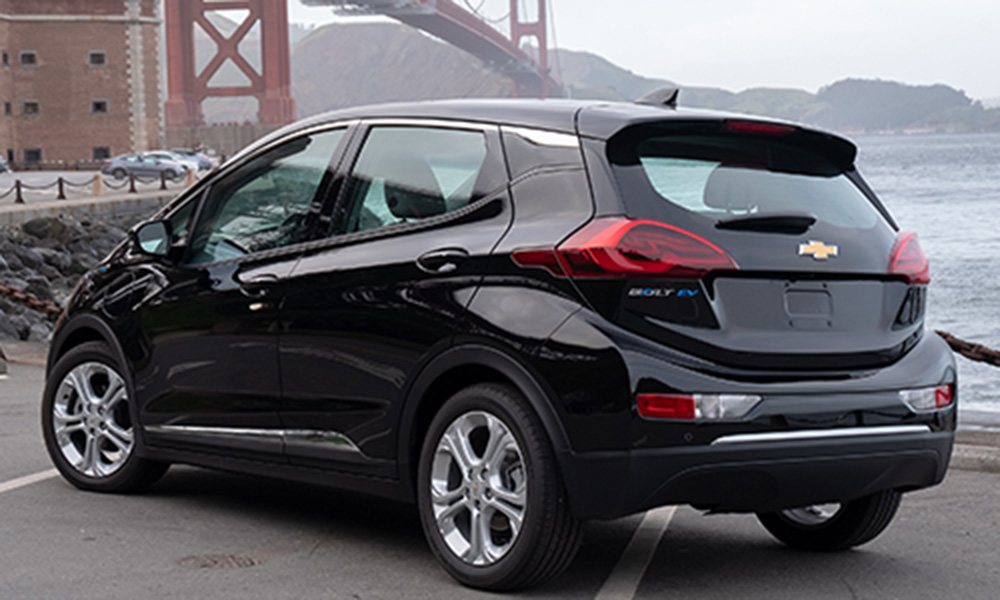
The single most important topic when shopping for a used Bolt is the battery fire recall. GM and battery supplier LG identified a rare manufacturing defect in certain LG-built cells, where a folded separator combined with a torn anode tab could create an internal short and, in a small number of cases, a fire. In August 2021, GM expanded the recall to cover essentially all 2017-2022 Bolt EV and 2022 Bolt EUV vehicles, nearly 142,000 cars. For the highest-risk vehicles, GM ultimately replaced the battery modules or the entire high-voltage pack with newer cells, and also rolled out advanced diagnostic software for others.
Counterintuitively, this recall created a real advantage for used buyers. Many used Bolts now carry a newer replacement battery pack, and those recall replacements came with a fresh 8-year/100,000-mile limited warranty starting from the installation date, not the original in-service date. That can be a meaningful plus. Before buying, ask for service records and run the VIN to confirm whether the pack was actually replaced, when, and what warranty now applies. A documented battery replacement is something to look for, not a red flag.
Beyond the battery, a few things shape the buying decision. The 2020 model year increased usable capacity and added range, so 2020-and-newer cars go a bit farther. The 2022 refresh restyled the car inside and out, lowered the price, and improved the seats and Level 2 charging, but it dropped a few features and DC fast-charging speed stayed modest, which is slow compared with newer EVs. Early cars (2017-2019) drew frequent complaints about narrow, firm front seats, so a long test-drive is worth it. The Bolt is also FWD-only with no all-wheel-drive option and no heat pump, which can affect cold-weather efficiency. Pricing-wise, the Bolt has depreciated significantly, which is largely what makes it such a strong value on the used market.
2017 — Launch year for the Bolt EV hatchback. Named 2017 Motor Trend Car of the Year and North American Car of the Year.
2018 — Mostly a carryover year; revised front seats with more padding were introduced, and over-the-air update capability arrived during this period.
2019 — Minor updates with new color choices and small feature tweaks. Battery and range were unchanged from 2017-2018.
2020 — Battery capacity increased through a chemistry change, raising EPA range. This is the first year of the higher-capacity pack.
2021 — Largely a carryover year and the center of the battery recall timeline; production was halted in August 2021 while GM redirected cells to recall replacements.
2022 — Major refresh: restyled front and rear, redesigned interior with push-button shifter and larger screen, improved seats, faster 11.5 kW Level 2 onboard charging, a lower starting price, and CCS DC fast charging as standard. The new Bolt EUV crossover launched this year alongside the EV, and the EUV offered Super Cruise hands-free driving, a first for Chevrolet.
2023 — Final year of the first-generation Bolt EV and Bolt EUV, both largely unchanged. GM ended production in December 2023.
2024-2025 — No Bolt offered; the model was discontinued after 2023.
2026 (next generation) — Next-generation Bolt returns, built on GM's Ultium platform with a new LFP battery, NACS charging, and a larger crossover-style body. It is positioned again as Chevrolet's most affordable EV.
Within the Bolt family, the EV and EUV are close cousins on the same platform. The Bolt EUV is about six inches longer with a stretched wheelbase, which adds roughly three inches of rear legroom and makes it the more comfortable choice for back-seat passengers. The EUV was also the only Bolt to offer Super Cruise, GM's hands-free highway driver assistance. Both are front-wheel drive, and neither offers all-wheel drive. Outside of those differences, the two drive similarly and share the same powertrain and modest DC fast-charging speed.
Against Chevrolet's newer EVs, the Bolt is the small, affordable entry point. The Equinox EV is a larger compact crossover on the Ultium platform with more interior space, more range, faster charging, and available all-wheel drive, and it now fills the affordable-Chevy-EV role the Bolt once held. The Blazer EV is bigger and more premium still, a midsize crossover with more power and higher trims. The Silverado EV is in another category entirely, a full-size electric pickup built for towing, payload, and long range.
In short, the Bolt sits at the bottom of Chevrolet's EV size and price ladder. It is a subcompact hatchback (EV) or small crossover (EUV) aimed at commuting, city driving, and value, while the Equinox EV, Blazer EV, and Silverado EV step up in size, capability, and price. For a used shopper who wants the most affordable Chevy EV and does not need AWD or a large vehicle, the Bolt is the natural fit.
Survey feedback from Recurrent's community of EV owners that includes a variety of model years and vehicle trims.

Yes, it was serious. A rare defect in certain LG-built cells could cause an internal short and, in a small number of cases, a fire, leading GM to recall nearly all 2017-2022 Bolt EVs and 2022 Bolt EUVs. GM addressed it by replacing the battery modules or full packs on affected vehicles and issuing diagnostic software. A used Bolt that has had the recall remedy completed is the goal.
Check the service history and run the VIN through a Chevrolet dealer or GM's recall lookup. It matters because recall battery replacements came with a fresh 8-year/100,000-mile warranty starting from the installation date, so a replaced pack can mean newer cells and more remaining warranty than the car's age would suggest.
The EUV is about six inches longer with more rear legroom and was the only Bolt available with Super Cruise hands-free driving. The EV hatchback is smaller and was generally less expensive. Both are front-wheel drive and share the same platform and powertrain.
Super Cruise requires an active OnStar/Super Cruise plan, which is separate from the car itself. New EUVs came with a trial period, but on a used car that trial may have expired, and transfer terms to a second owner vary by situation. If hands-free driving matters to you, confirm the current plan status and cost with the dealer or OnStar before buying.