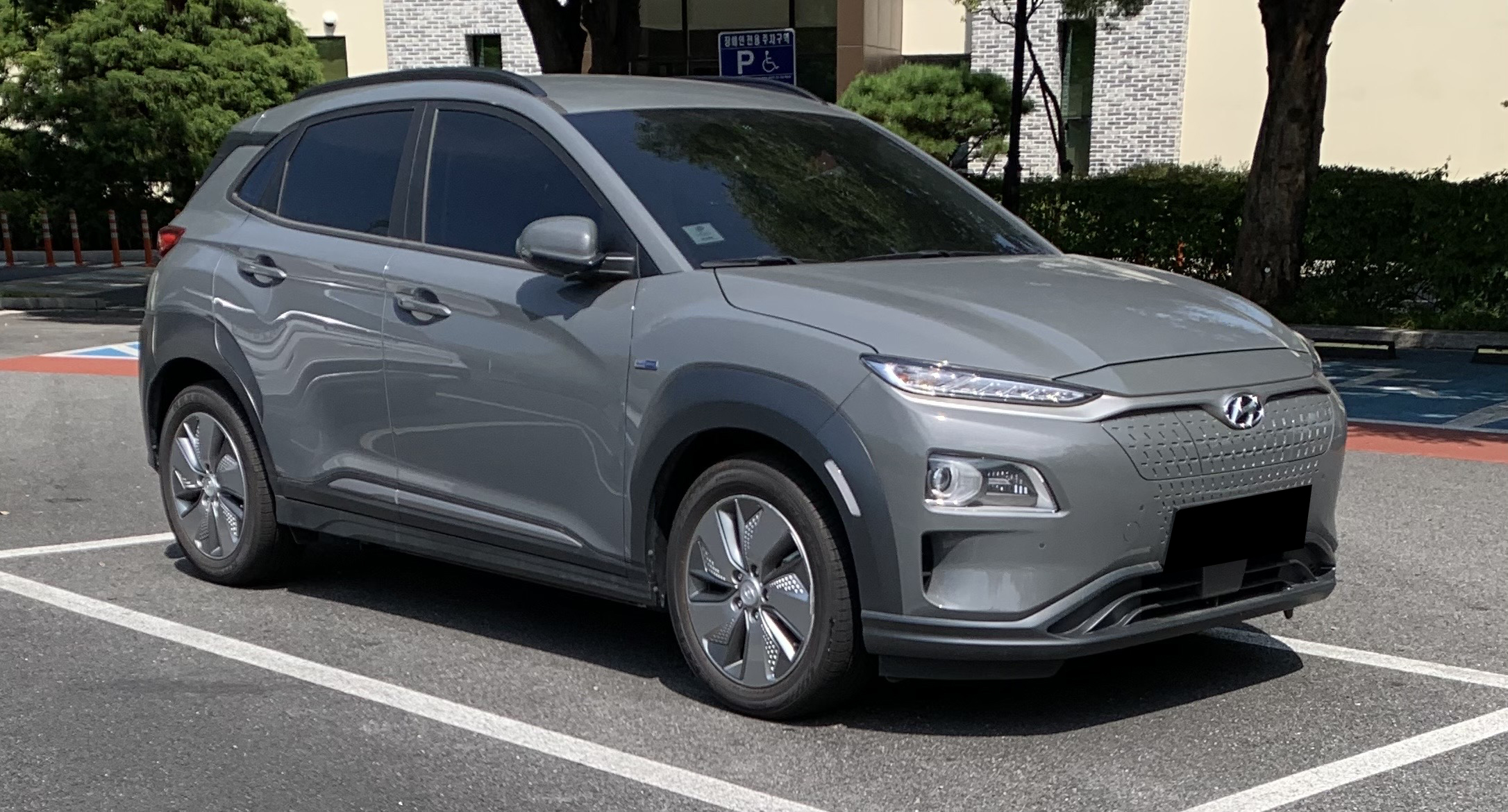
Hyundai Kona EV

  • Range after 3 years
  • Range after 5 years
  • 97% of original
  • 97% of original
Expected range based on over 1 billion miles of real world driving data from the
from the Recurrent community of EV owners.
4.7
out of 5
Community Satisfaction
The Hyundai Kona EV is an all-electric, front-wheel-drive compact SUV that builds on the popular Kona lineup while offering the benefits of electric driving. In Recurrent's testing, it delivers a typical range of 233 miles, making it competitive with other popular EVs such as the Tesla Model Y and Volkswagen ID.4. Owners in the Recurrent Community frequently praise the Kona EV for its reliability, low cost of ownership, and approachable design, noting that it feels like an "ordinary car in the best way." If you own a Kona EV and are considering selling, Recurrent can help connect you with EV experts who understand the value of electric vehicles.

Battery

Battery Warranty

10 yr / 100k miles

Time to add 100 miles

20 – 24 min

Peak Charging

100kW

Efficiency

2.97 – 3.50 mi/kWh

MPGe

99.9 – 118.0 miles

Range

Range vs EPA

Higher

Winter Range (32°F)

76%

Summer Range  (90°F)

95%

Trims

Limited

64.0 – 64.8 kwh

N Line

64.8 kWh

SE

46.8 – 64.0 kWh

SEL

64.0 – 64.8 kWh

Tips for Buying Used

The Kona Electric comes in two distinct generations, and identifying which one you're looking at is the first step. Gen 1 (2019-2023) is the original subcompact built on a combustion-derived platform, front-wheel-drive only, offered with a smaller or larger battery and given a 2022 facelift that updated the styling and equipment. Gen 2 (2024 onward) is a larger, fully redesigned car still on a 400-volt combustion-derived platform and still front-wheel-drive, with a roomier interior and updated technology.

For Gen 1 cars, the critical item is the battery fire recall. Following a series of fires worldwide involving 2019-2020 Kona Electric vehicles, Hyundai traced the problem to defective LG cells (a folded anode tab that could cause an internal short and, rarely, thermal runaway). Hyundai first issued a battery-management software update and later concluded that affected packs needed full replacement; the global campaign replaced batteries on the affected fleet. The US recall population was relatively small but covered 2019-2020 cars. This is the most important thing to verify on an early Kona Electric: run the VIN through NHTSA and confirm whether the car received the updated BMS and, critically, whether the battery pack was replaced under the campaign.

Otherwise, the Kona Electric is a well-regarded, efficient small EV. It charges more slowly than Hyundai's E-GMP cars because of its 400V architecture, so set expectations accordingly. Check whether a given car has the heat pump, which improves cold-weather efficiency and was not fitted to every early US car. Trims include SEL, Limited, and (Gen 2) Ultimate. Depreciation on Gen 1 cars has been significant, which can make a verified, battery-remedied example an affordable used EV.

Model Years

2019 — US launch of the first-generation Kona Electric, front-wheel-drive. Covered by the LG-cell battery fire recall.

2020 — Carryover Gen 1. The other model year covered by the battery fire recall; affected cars received BMS updates and, under the global campaign, battery replacement.

2021 — Gen 1 continues with the recall remedies in place across the fleet.

2022 — Mid-generation facelift with revised front and rear styling and updated equipment.

2023 — Final year of the first generation, carryover from the 2022 facelift.

2024 — Complete second-generation redesign: larger exterior and interior, new styling, updated technology, still a 400V front-wheel-drive layout. The electric version was central to the new Kona's development.

2025 — Gen 2 continues with minor updates.

How it Compares

The Kona Electric is Hyundai's subcompact, value-oriented EV. It is smaller than the Ioniq 5 and sits at the entry end of Hyundai's electric range, prioritizing affordability and efficiency over outright space or speed.

The biggest technical difference from the Ioniq family is the platform. The Kona Electric uses a 400-volt, combustion-derived architecture shared in spirit with its gas counterpart, and it is front-wheel-drive only. The Ioniq 5, Ioniq 6, and Ioniq 9 all use the dedicated 800-volt E-GMP platform, which enables faster DC charging, available AWD, and vehicle-to-load power. In practice the Kona charges more slowly and offers fewer drivetrain options, but it is also more compact and easier to park.

On size and seating, the Kona Electric is a true subcompact crossover with five seats and a smaller cargo area than the Ioniq 5. It competes for buyers who want a small, efficient EV rather than the larger, more feature-rich Ioniq 5 or the sedan-bodied Ioniq 6. The three-row Ioniq 9 is in an entirely different class as a large family SUV. The Kona Electric also has a gas-powered Kona sibling, which is useful to keep in mind when reading listings, since the two look similar but are mechanically very different.

Owner Satisfaction

Survey feedback from Recurrent's community of EV owners that includes a variety of model years and vehicle trims.

"It is really an affordable way to replace an ICE car without range anxiety"
"Charging for free at available stations, complimentary DC Fast occasionally and comp. from Electrify America, nice seats and amenities, immediate power with nearly 300 pd ft of torque, small but good storage and easy to maneuver"

Looking to Sell?

No games. No spam. No headaches. Just great offers for great electric cars.
Learn More

FAQ

What is the Gen 1 battery fire recall and how do I check it?

Early 2019-2020 Kona Electric cars used LG cells with a manufacturing defect that, in rare cases, could short internally and catch fire. Hyundai issued a battery-management update and, under a global campaign, replaced affected packs. Run the VIN through NHTSA's recall lookup and confirm the remedy, ideally a battery replacement, was completed.

What's the difference between Gen 1 and Gen 2 Kona Electric?

Gen 1 (2019-2023) is the smaller original car with a 2022 facelift. Gen 2 (2024 onward) is a full redesign: larger inside and out with updated technology. Both are front-wheel-drive and use a 400V platform.

Does the Kona Electric have a heat pump?

A heat pump was available and improves cold-weather efficiency, but it was not fitted to every car, especially some early US examples. If you drive in cold climates, confirm a specific car's equipment before buying.

Does the Kona Electric have a heat pump?

Hyundai's powertrain warranty is 10 years or 100,000 miles, with separate high-voltage battery coverage. Remaining protection depends on the in-service date, mileage, and whether terms carry over to a second owner, so verify by VIN.