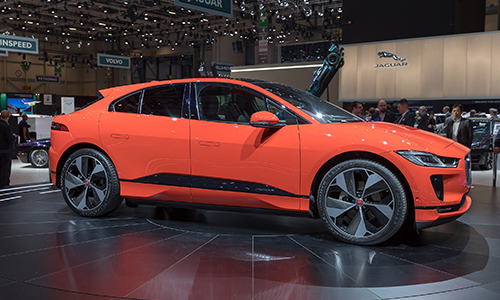
The single most important item on any used I-Pace checklist is the battery recall history. The I-Pace uses LG-supplied high-voltage battery cells, and NHTSA records show a long, escalating series of overheating/fire-risk recalls beginning in 2023 (recall 23V369) and running through a fresh campaign filed in early 2026. Affected model years span 2019 through 2024 across the various campaigns. Remedies evolved over time: early fixes were battery-control software updates that capped state of charge (to 80%, later 90%) and instructed owners to park and charge outdoors away from structures, and some 2019 cars were ultimately slated for battery replacement or repurchase. Before buying, run the VIN through NHTSA's recall lookup and confirm in writing which campaigns apply and whether the final remedy (not just an interim software cap) has been performed. A car still under an interim-only fix is one to approach carefully.
Beyond the battery, the I-Pace has well-documented owner-forum complaints around 12V battery drain and "phantom" power loss, often tied to out-of-date control-module and telemetry software on earlier cars. The 2021 model year brought the Pivi Pro infotainment system, a meaningful upgrade over the laggy original InControl Touch Pro setup, so a 2021-or-later car generally means a better screen experience and more mature software. Owners also report inconsistent indicated range and regenerative-braking behavior, and there have been separate recalls for windshield-defroster (coolant heater) failure and turn-signal compliance. Confirm all software is current and that the 12V system has been serviced.
Finally, factor in ownership economics. The I-Pace was built by Magna Steyr in Austria and is a low-volume luxury EV, so parts and qualified service can be harder to find and repairs run expensive. Jaguar has since discontinued the I-Pace as part of its all-electric brand reboot, which removes it from showrooms and tends to push used prices down. That depreciation can make a sorted, fully-remedied example attractive, but only if you have a service plan and have confirmed the battery recall work is genuinely complete.
2019 — First US model year. Launched as Jaguar's first modern EV, built by Magna Steyr with an LG battery pack, offered in SE, HSE, and First Edition trims. This is the year most affected by the earliest and most serious battery overheating recalls; some 2019 cars were ultimately subject to battery replacement or repurchase, so verify remedy status carefully.
2020 — Largely a carryover year; still uses the original InControl Touch Pro infotainment. Included in the multi-year battery overheating recall campaigns, so confirm recall work.
2021 — Notable for the switch to the Pivi Pro infotainment system, a major improvement in responsiveness and usability over the prior setup. Still appears in later battery and turn-signal recall actions; confirm software and remedy status.
2022 and later — Continued with Pivi Pro and minor revisions before Jaguar wound the model down as part of its pivot to an all-electric brand relaunch. Later cars also appear in some recall campaigns; check the VIN.
The I-Pace is Jaguar's only purpose-built modern EV, so the most useful comparisons are against Jaguar's gas-powered lineup. In size and footprint it slots near the F-Pace, Jaguar's mid-size gas SUV, while delivering a lower, more car-like driving position and a flat EV floor. Buyers cross-shopping the smaller E-Pace will find the I-Pace roomier and more premium inside, with a more upscale price tier to match.
Against Jaguar's sedans, the I-Pace offers a different proposition: the XF is a traditional luxury sedan, whereas the I-Pace combines crossover practicality with instant electric torque and a quiet cabin. Creature comforts (materials, seat quality, available luxury features) sit at the top of Jaguar's range, consistent with its flagship-EV positioning when new.
Strategically, the I-Pace stands somewhat alone: rather than being one of several EVs, it was Jaguar's solo electric effort before the brand announced a full reboot as an all-electric marque. That makes it a transitional model, and shoppers should weigh that the nameplate has been discontinued rather than folded into a broader continuing EV family.
Survey feedback from Recurrent's community of EV owners that includes a variety of model years and vehicle trims.

Yes. NHTSA records show multiple overheating/fire-risk recalls on the LG-supplied high-voltage battery, beginning in 2023 and continuing through a 2026 campaign, covering model years roughly 2019 through 2024. Always run the specific VIN through NHTSA and confirm whether the final remedy has been completed, not just an interim software cap.
The 2021 model year introduced Pivi Pro, which is meaningfully faster and more user-friendly than the original InControl Touch Pro system in 2019-2020 cars. If infotainment matters to you, favor a 2021-or-later example.
Confirm all control-module and telemetry software is up to date, and ask about the 12V battery, since owners widely report 12V drain and phantom power-loss issues on earlier cars. Also check for completion of the separate windshield-defroster and turn-signal recalls.
Generally yes. The I-Pace is a low-volume luxury EV built in Austria, and the brand has discontinued it, so qualified service can be limited and repair costs run high. Budget accordingly and ideally line up a capable service shop before purchase.