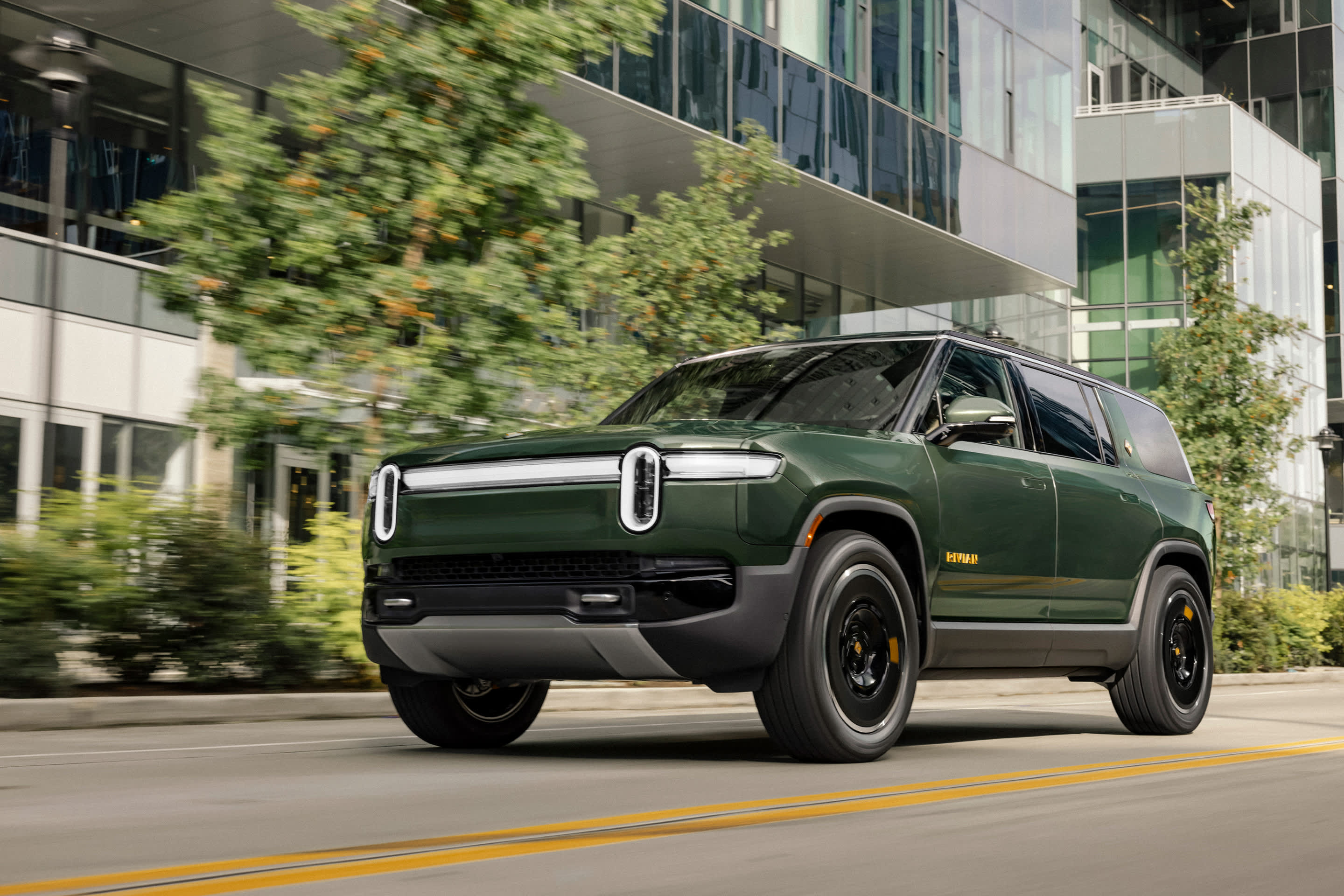
As with the R1T, the most consequential question on a used R1S is Gen 1 versus Gen 2. SUVs from launch through model year 2024 are Gen 1; the 2025 model year brought a thorough re-engineering. Gen 2 swapped the Bosch-supplied quad-motor drive units for Rivian's own in-house "Ascend" motors and replaced the older domain-based wiring (around 17 ECUs) with a simplified zonal electrical architecture (about 7 ECUs). The practical takeaway: Gen 2 is newer in its motors, suspension, batteries, and electronics with fewer outside suppliers, while Gen 1 SUVs carry the longest service track record and the best-documented quirks.
Confirm the exact configuration. Gen 1 R1S came as Dual-Motor, Performance Dual-Motor (software-unlocked), and Quad-Motor (Bosch-built), with Standard (LFP on the smallest pack), Large (the most common), and Max batteries — and not every motor/pack pairing was offered in every year. Gen 2 (2025+) offers Dual, Tri, and Quad setups with much higher outputs. Note that all R1S models are three-row seven-seaters; a five-seat option was dropped before production began. Also be aware the early base "Explore" trim was discontinued in 2022, leaving the better-equipped "Adventure" trim as the volume configuration.
Inspect for the same Gen 1 issues seen across the R1 line: 12V/accessory-battery faults (sometimes a "12V battery needs service" warning, addressed with battery/bracket replacement and software), infotainment freezes, wind and seal noise, and front-end/driveline wear on higher-mileage cars. One R1S-specific note: early reviewers flagged a fixed glass roof without a sunshade, which can make the cabin hot in strong sun. Verify all recalls are closed via the VIN at nhtsa.gov — documented R1S recalls include a 2023 front passenger airbag/seat-belt sensor issue, a small side-curtain airbag fastening recall on some 2022-2023 SUVs, a tire-placard labeling error, and a second-row seat-belt retractor fastening recall affecting 2022-2026 SUVs. Finally, weigh that Rivian is a young automaker: service coverage is uneven by region, parts and body repairs can take time, and insurance runs high. Used R1S pricing has trended downward, which works in a patient buyer's favor.
2022 — Launch year (first customer deliveries late 2022). Offered as Quad-Motor (Bosch-built) with the Large battery; Launch Edition and Adventure packages led, and the base Explore trim was dropped before deliveries ramped. All R1S models are seven-seat, three-row SUVs. Standard Driver+ assist hardware was included. Volumes were very low as production ramped, and the Max and Standard packs were not yet shipping.
2023 — A breakout production year. The in-house Enduro Dual-Motor and the Performance Dual-Motor became available, and the Max pack reached customers. The 2023 R1S earned IIHS Top Safety Pick+. Continuous over-the-air software refinement throughout the year.
2024 — Continued availability of Dual, Performance Dual, and Quad motors across Standard, Large, and Max packs (with some pairing limits). Ongoing OTA updates and running production improvements; Rivian was recognized for strong owner satisfaction. Final Gen 1 model year.
2025 — The Gen 2 re-engineering. Motors moved fully in-house (Bosch dropped on the Quad), the new zonal electrical architecture arrived, and the motors, suspension, batteries, and electronics were revised. Configurations became Dual, Tri, and Quad with much higher peak outputs, trims realigned around Adventure (Dual) and Ascend (Tri/Quad), and higher-definition cameras/sensors enabled Rivian's expanded Autonomy Platform+ driver-assist features.
The R1S and R1T are close mechanical twins, sharing the vast majority of their parts, the same skateboard chassis, identical drive-unit and battery options, and the same software. What separates them is body and purpose. The R1S is an enclosed three-row SUV seating up to seven; the R1T is a five-seat crew-cab pickup with an open bed. If you carry people and want weather-protected cargo, the R1S is the natural choice.
On storage, the R1S offers large enclosed cargo volume behind its folding second and third rows, plus a lockable frunk and a small under-floor compartment. What it gives up versus the R1T is the open bed, the full-width Gear Tunnel, and the truck's under-bed storage. Both can tow heavily for EVs, but the R1T's longer wheelbase and bed make it the better hauler, while the R1S's shorter wheelbase yields a tighter turning circle and slightly better departure and breakover angles on the trail.
The seating math is the deciding factor for many shoppers. The R1S's third row is genuinely usable but tight for adults, with a low seat cushion; still, it makes the R1S a true family vehicle in a way the five-seat R1T is not. Beyond seating and body style, the two are remarkably similar in trims, features, drive modes, and creature comforts.
For context, Rivian's range is expanding downward. The mid-size five-seat R2 and the smaller R3 are newer, more affordable models aimed below the R1 line — worth knowing if a used R1S strains the budget but you want a Rivian. Rivian also builds commercial Electric Delivery Vans (EDVs), widely seen in Amazon's fleet; those are purpose-built work vehicles, not cross-shopped with the R1S. Among the consumer models, the R1S and R1T sit at the top for capability and price, with the R1S being the family-oriented flagship.
Coming Soon

Yes. Every R1S is a three-row, seven-passenger SUV — a five-seat version was dropped before production began. The third row is functional but tight for adults; the seat cushion sits low, so taller passengers may ride with knees up. It is well suited to kids and occasional adult use.
With the second and third rows folded, the R1S opens up a large flat cargo area (roughly 100+ cubic feet of total enclosed volume), plus a lockable front trunk (frunk) of about 11 cubic feet and a small under-floor compartment. Unlike the R1T, it does not have an open bed or the Gear Tunnel.
On Gen 1 SUVs, watch for 12V/accessory-battery warnings, infotainment freezes that may need a reboot, wind and seal noise, and front-end/driveline wear on higher-mileage examples. The fixed glass roof has no sunshade, which some owners find hot in strong sun. Confirm all recalls are completed by checking the VIN at nhtsa.gov.
Yes — it is built for it. Air suspension provides a wide ground-clearance range (up to roughly 14.9 inches), there are dedicated off-road drive modes, and a Camp Mode self-levels the vehicle on uneven ground. Its shorter wheelbase relative to the R1T gives it slightly better departure and breakover angles for technical terrain.