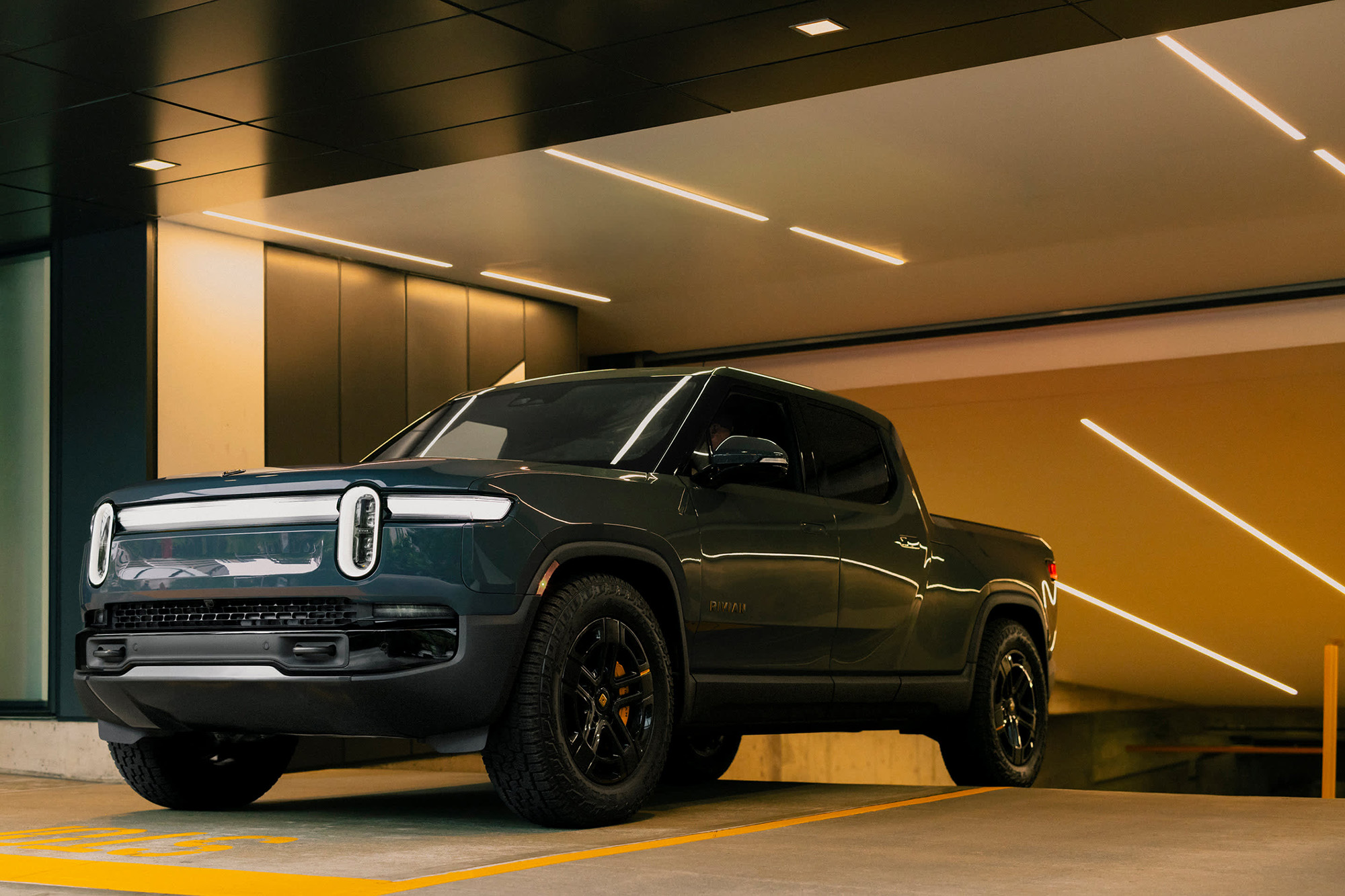
Rivian R1T

  • Range after 3 years
  • Range after 5 years
  • 95% of original
  • 93% of original
Expected range based on over 1 billion miles of real world driving data from the
from the Recurrent community of EV owners.
Coming Soon
out of 5
Community Satisfaction
Rivian's R1T stands out for its innovative design, powerful performance, and luxury features. Slightly larger than a Ford Ranger, it delivers up to 835 horsepower and a towing capacity of 11,000 pounds. Although pricey, its capabilities and performance, including rapid acceleration (0–60 mph in as little as 3.3 seconds), make it a strong contender in the EV truck market.

Battery

Battery Warranty

8 yr / 125k - 175k miles

Time to add 100 miles

16 - 18 min

Peak Charging

200 - 220kW

Efficiency

2 – 2.6 miles / kWh

MPGe

67 – 86 miles

Range

Range vs EPA

Equal

Winter Range (32°F)

78%

Summer Range  (90°F)

95%

Trims

Adventure

92.5 – 135.0kWh

Ascend Tri Max

140kWh

Dual

92.5 - 140kWh

Quad Max

140kWh

Tips for Buying Used

The single most important thing to understand when shopping a used R1T is the Gen 1 / Gen 2 divide. Trucks built from launch through model year 2024 are Gen 1; the 2025 refresh was a deep re-engineering, not a styling update. In Gen 2, Rivian replaced the Bosch-supplied quad-motor drive units with its own in-house "Ascend" motors, and swapped the old domain-based wiring (roughly 17 ECUs) for a simpler zonal electrical architecture (about 7 ECUs, with around 1.6 miles of wiring removed). For a used buyer this matters two ways: Gen 2 is mechanically and electrically newer with fewer supplier dependencies, while Gen 1 trucks are the ones with the longest real-world service history and the most documented quirks.

Know the configuration you are looking at. Gen 1 came as Dual-Motor, Performance Dual-Motor (a software-unlocked higher-output version of the Dual), and Quad-Motor (Bosch-built). Battery packs were Standard (LFP chemistry on the smallest pack), Large (the most common), and Max. Note that Quad-Motor and the Max pack were not always offered together, and availability shifted year to year, so verify the actual build rather than assuming. Gen 2 (2025+) offers Dual, Tri, and Quad motor setups with substantially higher outputs. The Quad badge and brake-caliper color are useful quick visual tells, but always confirm via the window sticker or VIN.

Early-build Gen 1 trucks have well-documented owner-forum issues worth inspecting for: 12V/accessory battery faults (sometimes a "12V battery needs service" warning, addressed by Rivian with battery and bracket replacements and software updates), infotainment freezes and reboots, wind/seal noise, and front-end/driveline complaints (half-shafts, control arms, dampers) on higher-mileage examples. Confirm all open recalls have been completed via the VIN at nhtsa.gov — documented R1T recalls include a 2023 front passenger airbag/seat-belt sensor issue, a tire-placard labeling error on some 2022-2023 trucks, side-curtain airbag concerns, and a second-row seat-belt retractor fastening recall affecting 2022-2025 trucks. Finally, remember Rivian is a young automaker: the service-center network is sparse in many regions, parts and body-shop repairs can mean long waits, and insurance tends to run high. Pricing on used R1Ts has been on a clear downward trend, so patience favors the buyer.

Model Years

2022 — Launch year. Available only as Quad-Motor (Bosch-built drive units) with the Large battery; Launch Edition and Adventure packages led the rollout. Storage highlights debuted: the front trunk (frunk), the full-width Gear Tunnel, and a power tonneau option. Standard Driver+ driver-assist hardware (cameras, radar, ultrasonics) was included. Production was still ramping, so build quality and software were a work in progress, and the Max pack and base Standard pack were delayed.

2023 — Powertrain choices expanded. The in-house Enduro-based Dual-Motor arrived, joined in April by the Performance Dual-Motor. The Max pack reached customers this year. Software matured through over-the-air updates. Rivian also confirmed it would not ship the long-promised "Tank Turn" feature.

2024 — Continued availability of Dual, Performance Dual, and Quad motors across Standard, Large, and Max packs (with some pairing restrictions). Ongoing OTA improvements and running production refinements. The 2024 R1T earned IIHS Top Safety Pick+. This is the last Gen 1 model year.

2025 — The Gen 2 re-engineering. Rivian moved all motors in-house (dropping Bosch on the Quad), introduced the new zonal electrical architecture, and revised the motors, suspension, batteries, and electronics. Configurations became Dual (including a Dual Standard), Tri, and Quad, with much higher peak outputs. Trims shifted to Adventure (Dual) and Ascend (Tri/Quad), and the higher-definition camera/sensor set enabled Rivian's expanded Autonomy Platform+ driver-assist features. Pricing direction continued to span a wide range depending on configuration.

How it Compares

The R1T and R1S are mechanical siblings — they share the great majority of their components, the same skateboard chassis, the same drive-unit and battery options, and the same software. The defining difference is body style. The R1T is a five-seat crew-cab pickup with an open 4.5-foot bed; the R1S is an enclosed three-row SUV that seats up to seven. If you regularly haul open or dirty cargo, tow, or want a true truck bed, the R1T is the clear pick.

Storage tells the story. The R1T's open bed pairs with a frunk, a small under-bed compartment, and the signature full-width Gear Tunnel behind the cab — a clever lockable pass-through the R1S does not have. The R1S trades all of that for large enclosed cargo volume behind its folding second and third rows, plus its own frunk. Both tow heavily for EVs (the R1T is rated up to 11,000 lb), but the R1T's longer wheelbase and bed make it the more natural tow and cargo vehicle, while the R1S's shorter wheelbase gives it a tighter turning circle and slightly better departure and breakover angles off-road.

For families, the R1S is the obvious choice: weather-protected cargo and three rows of seating versus the R1T's single five-seat cab. The third row is usable but tight for adults. Trim, motor, battery, and feature menus are otherwise nearly identical between the two.

For broader context, Rivian's lineup is widening. The smaller, lower-priced R2 (a five-seat mid-size SUV) and the even more compact R3 are newer, more affordable entries aimed below the R1 line — relevant if an R1T or R1S stretches the budget. Rivian also builds commercial Electric Delivery Vans (EDVs), best known from the Amazon fleet; those are work vehicles and not cross-shopped with the consumer R1 trucks. Within the consumer range, the R1T and R1S sit at the top on price and capability.

Owner Satisfaction

Coming Soon

Looking to Sell?

No games. No spam. No headaches. Just great offers for great electric cars.
Learn More

FAQ

What can the R1T's gear tunnel, frunk, and bed actually hold?

The R1T is unusually versatile for storage. It has an open bed (about 4.5 feet long), a lockable front trunk (frunk) of roughly 11 cubic feet, a small compartment under the bed floor, and the full-width Gear Tunnel behind the cab — a lockable pass-through that can swallow long, narrow gear and accepts optional accessories. Multiple 120V outlets are spread across the bed, frunk, and tunnel.

How much can a Rivian R1T tow?

Properly equipped, the R1T is rated to tow up to 11,000 pounds, with a hidden hitch behind a removable panel. As with any EV, towing heavy loads reduces driving range substantially, so plan stops accordingly.

What are the most common problems on used R1Ts?

On Gen 1 trucks especially, owners report 12V/accessory-battery faults, occasional infotainment freezes requiring reboots, wind and seal noise, and on higher-mileage examples front-end and driveline parts (half-shafts, control arms, dampers). Many issues have been addressed through over-the-air software updates and service campaigns. Always confirm open recalls are closed by checking the VIN at nhtsa.gov.

What are the most common problems on used R1Ts?

It depends heavily on where you live. Rivian is a young automaker with a still-growing service-center footprint, plus mobile service in some areas. In regions without a nearby center, repairs and certified body work can involve longer waits and transport, and insurance costs tend to be higher than for established brands. Factor service access into your buying decision.