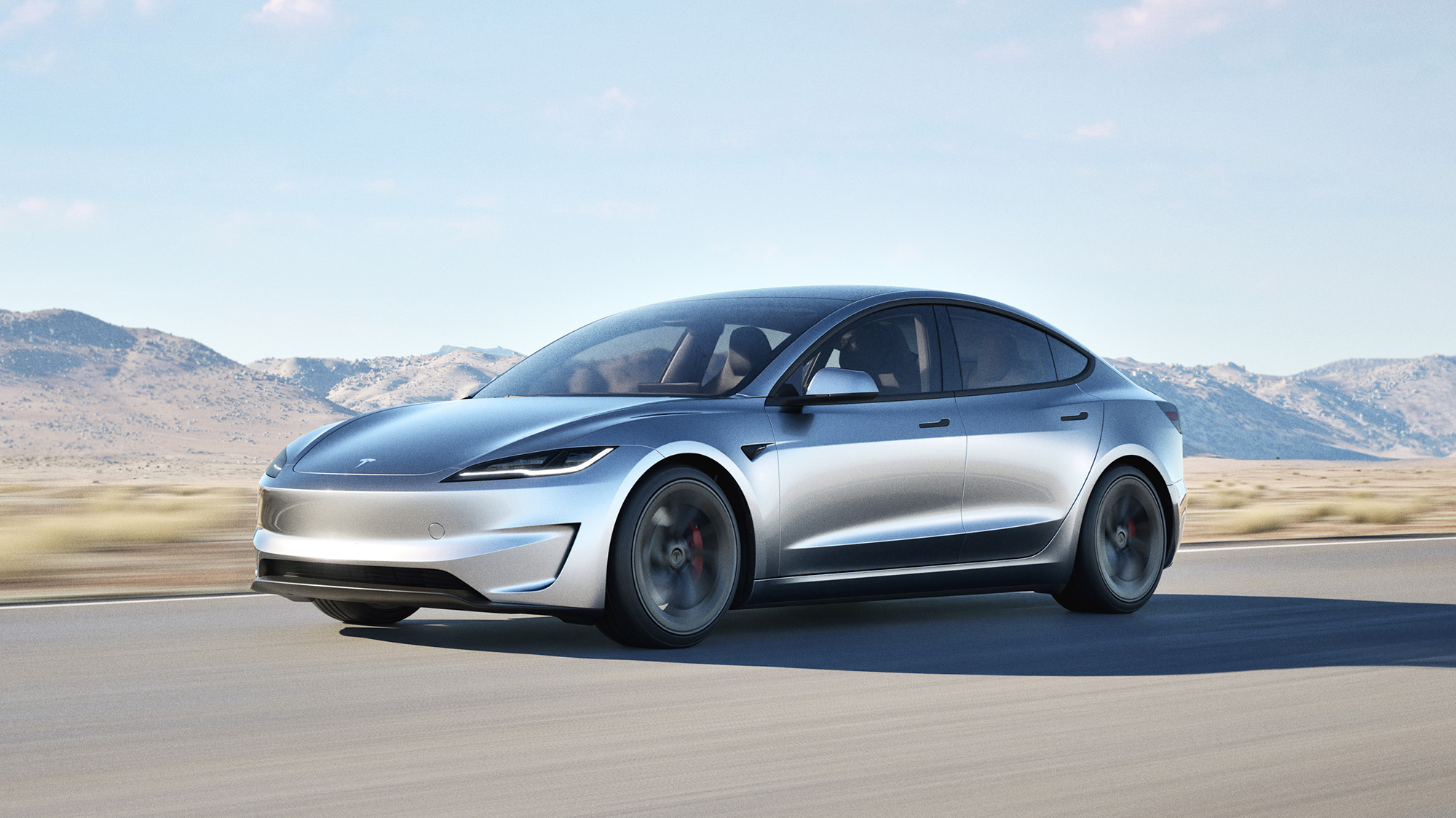
The Model 3 is Tesla's most common used EV, which works in your favor: there are a lot of them, so you can be picky. The biggest dividing line in the used market is the January 2024 "Highland" refresh. Pre-Highland cars (2017 to early 2024) have stalks for turn signals and gear selection and a more conventional cabin; Highland cars moved turn signals to steering-wheel buttons and gear selection to the touchscreen, which some shoppers love and others dislike. Drive one of each before deciding, because it changes the day-to-day experience more than the spec sheet suggests.
Check battery chemistry, because it affects how you'll live with the car. Standard Range / Standard Range Plus cars built from roughly 2021 onward generally use LFP (lithium iron phosphate) packs, which Tesla recommends charging to 100% routinely and which tolerate that well. Long Range and Performance cars use NCA chemistry, which is happiest charged to 80-90% for daily use. On the road test, confirm the rearview camera, all door handles, and the touchscreen behave normally, and look closely at panel gaps and paint, since early Tesla fit-and-finish was inconsistent.
Be aware of a few documented recalls. Most are addressed by over-the-air software updates rather than shop visits, but you should still verify they were applied: a December 2023 Autopilot update (driver-monitoring) covering essentially all Autopilot-equipped cars, and a late-2024 rearview-camera display fix on certain 2024-2025 cars with specific computer hardware. There was also a 2021-2022 heat-pump campaign where a valve could stick and cut cabin heat in cold weather, fixed via software. As with all Teslas, depreciation has been steep, so used Model 3s tend to offer strong value relative to their original price.
2017 — Production launch in mid-2017, initially a single Long Range RWD trim with the minimalist single-screen interior and no instrument cluster. Very low volume in this first partial year.
2018 — Production ramped dramatically. Dual-motor All-Wheel Drive and the Performance trim arrived, along with the mid-range and the more affordable shorter-range variants later in the year.
2019 — Standard Range Plus became the entry point. Tesla rolled out its in-house "Hardware 3" Autopilot computer during this period, and overall build consistency improved over the earliest cars.
2020 — Mid-cycle hardware tweaks including a heat pump for improved cold-weather efficiency, plus a power liftgate and a redesigned center console introduced toward the end of the year as part of the "2021" refresh rolling in.
2021 — Full refresh: exterior chrome delete (black trim), double-pane front glass for a quieter cabin, redesigned center console, and the heat pump now standard. Standard Range cars transitioned to LFP battery chemistry in North America.
2022 — Largely a carryover year with minor running changes. Strong production volume; this is one of the most plentiful used model years.
2023 — Continued as carryover for most of the year before the Highland refresh, with running improvements. Pre-Highland 2023 cars are common and well-understood mechanically.
2024 — The "Highland" refresh arrived in the US in January: new front and rear styling, a fully revised interior with ventilated front seats, acoustic glass, ambient lighting, a rear-seat screen, turn-signal buttons on the wheel, and gear selection moved to the touchscreen. Long Range RWD was added during the year.
2025 — Highland carryover with the Performance variant returning to the lineup. Refined ride and noise tuning continued from the refresh.
2026 — Continuation of the Highland generation with running updates.
The Model 3 is Tesla's entry point: a compact sedan that's the smallest and most affordable car in the lineup. If you want the lowest cost of entry and don't need SUV practicality, this is the one. It seats five, with a trunk plus a small front trunk ("frunk"), but it sits low and has a fixed glass roof rather than a tall cargo area.
The Model Y is essentially the Model 3's taller crossover sibling, built on the same platform and sharing most of its interior and tech. The Y costs more, gives up a little efficiency and handling sharpness, but adds a hatchback opening, more cargo room, a higher seating position, and an optional small third row. For most families deciding between the two, it comes down to whether you want sedan dynamics and price (Model 3) or SUV space and versatility (Model Y).
Stepping up, the Model S is Tesla's full-size flagship sedan: larger, faster in Plaid form, more luxurious, and considerably more expensive, with features like rear-seat space and air suspension the 3 doesn't offer. The Model X is the large three-row SUV with falcon-wing doors. The Cybertruck is the outlier pickup. For a shopper who wants Tesla's software, Supercharger access, and a daily-driver footprint at the best value, the Model 3 is the sensible default, with the Model Y as the upsell when you need more room.
Survey feedback from Recurrent's community of EV owners that includes a variety of model years and vehicle trims.

Look at the front: Highland cars (US deliveries from January 2024) have slim, sleek headlights and no chrome trim, plus a cleaner front bumper. Inside, Highland cars have no turn-signal or gear stalks, a small screen for rear passengers, and ventilated front seats. Older cars have two stalks behind the wheel.
Mechanically the Model 3 is simple and generally dependable, with few moving parts to wear out. The most common gripes are fit-and-finish on early cars (panel gaps, paint, trim) and occasional 12-volt battery or door-handle issues. Confirm the touchscreen, cameras, and all four door handles work, and check service history for any software recall fixes.
Standard Autopilot is included on the car and stays with it. Purchased upgrades like Enhanced Autopilot or Full Self-Driving (FSD) are tied to the vehicle in most cases but can be inconsistent on used and third-party sales, so verify in the car's software menu before buying rather than trusting the listing.
Standard Range / Standard Range Plus is the value pick and, in LFP form, can be charged to 100% daily. Long Range adds dual-motor all-wheel drive and more range. Performance adds quicker acceleration, upgraded brakes, and a sportier setup. Decide based on whether you prioritize price, all-weather traction, or speed.