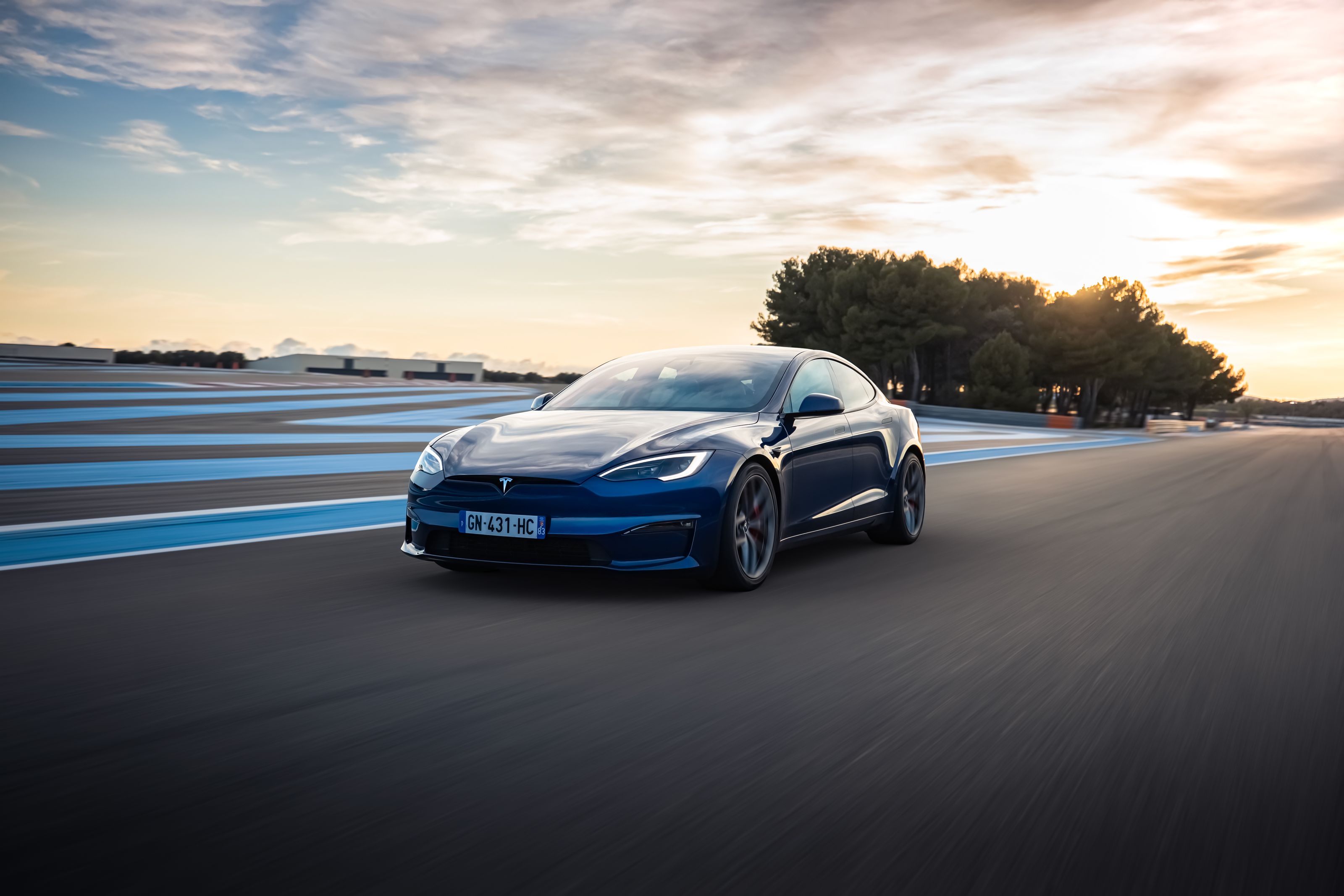
The Model S has the longest history of any Tesla, so condition and model year matter enormously. The single most important thing to check on older cars (roughly 2012 to early 2018) is the MCU1 infotainment computer, which used an 8GB eMMC memory chip that wears out and fails. This was the subject of a 2021 NHTSA recall covering about 135,000 Model S and X vehicles; Tesla's remedy replaced the chip, so confirm the recall was completed or that the car already has the newer MCU2. A laggy or dead center screen on an older S is a red flag.
Air suspension is standard on many S trims and is a known maintenance item as cars age. On your test drive, make sure the car raises and lowers correctly and isn't throwing suspension errors, and budget for the possibility of strut or compressor work down the line. Also note the major dividing line of the early-2021 refresh: cars from that point on got a completely new interior with the controversial "yoke" steering wheel (a round wheel became available again from early 2023), a horizontal center screen, and the tri-motor Plaid trim. Pre-2021 cars have a conventional round wheel and a vertical portrait screen.
Battery and drivetrain are generally robust, but very high-mileage early cars can show reduced range and, occasionally, drive-unit replacements (often already done under warranty). Verify any applicable software recalls were applied, including the December 2023 Autopilot driver-monitoring update and the late-2024 rearview-camera fix on certain newer cars. The Model S depreciates heavily, so a well-maintained used example can represent a lot of car for the money, but factor in that out-of-warranty repairs on a flagship are not cheap.
2012 — Launch year. The Model S established Tesla as a serious automaker, debuting mid-2012 with the large portrait touchscreen and rear-wheel drive.
2013 — Production scaled up significantly; the S became the best-selling car in its class and won wide critical acclaim.
2014 — Dual-motor all-wheel drive arrived with the "D" designation (e.g., P85D) late in the year, along with the first Autopilot hardware sensors on cars built from around October.
2015 — Introduction of the 70D and 90D battery options and the high-performance "Ludicrous" mode on P90D cars. Autopilot software began rolling out.
2016 — Mid-cycle facelift replaced the black nose cone with a body-color front fascia. A new 60 kWh entry option appeared; "Hardware 2" Autopilot sensors arrived later in the year.
2017 — Battery lineup simplified to 75D, 100D, and P100D. This is roughly when the more capable second-generation Autopilot hardware was standard.
2018 — Running improvements; importantly, cars built after around March 2018 used the newer MCU2 infotainment computer, avoiding the eMMC failure that affects earlier cars.
2019 — "Raven" update brought a more efficient drivetrain and revised adaptive air suspension, meaningfully improving range and ride.
2020 — Long Range and Performance trims continued with the Raven hardware; minor running changes.
2021 — Major refresh in early 2021: all-new interior, horizontal center screen, the "yoke" steering wheel, and the tri-motor Plaid trim. Standard Plaid replaced the prior top performance models.
2022 — Plaid and Long Range carryover; production stabilized after the refresh ramp.
2023 — A conventional round steering wheel returned as an option (and later the default) alongside the yoke. Minor running updates.
2024 — Continued refresh-generation production with running changes; volumes low relative to the 3 and Y.
2025 — Final stretch of production for the S. Tesla wound down the Model S and X, with production ending and only limited inventory remaining.
The Model S is Tesla's flagship sedan: the largest, most powerful, and most expensive car in the lineup (the Plaid is among the quickest production cars made). It's the choice for a shopper who wants a full-size luxury EV with maximum range, performance, and presence, and who doesn't need an SUV body.
Compared to the Model 3, the S is in a different class entirely: bigger, faster, more luxurious, with air suspension and a more spacious rear seat, but at a substantially higher price even used. Many shoppers cross-shop a high-mileage used Model S against a newer Model 3, and the answer depends on whether you value size and prestige or lower running costs and newer tech.
Within the lineup, the Model X is the S's SUV counterpart: same flagship tier and powertrains, but with falcon-wing doors, a taller body, and up to three rows of seating. If you want flagship Tesla performance but need to haul people and gear, the X is the natural pick; if you prefer a lower, sleeker sedan, the S is it. The Model Y and Cybertruck sit in more mainstream and specialized niches respectively. For the buyer who wants Tesla's best sedan and is comfortable with flagship repair costs, the Model S stands alone.
Survey feedback from Recurrent's community of EV owners that includes a variety of model years and vehicle trims.

The MCU1 infotainment computer on cars built before about March 2018. Its 8GB memory chip wears out and was recalled in 2021. Confirm the fix was done or that the car has the newer MCU2, and on the test drive make sure the screen is responsive, since a failed unit affects climate controls, chimes, and more.
It's not a dealbreaker, but it is a known aging item. Make sure the car raises and lowers properly and shows no suspension fault messages, and understand that struts or the air compressor can need replacement on higher-mileage cars. Coil-sprung early base cars avoid this entirely.
The refreshed cars have a horizontal landscape center screen, a redesigned dash, and originally came with a "yoke" steering wheel (a round wheel returned as an option in 2023). Pre-2021 cars have a tall vertical portrait screen and a conventional round wheel.
They can be. It's a low-volume flagship, so out-of-warranty work, body repairs, and suspension or computer components cost more than on a Model 3 or Y. Factor this into your budget and prioritize cars with clean service histories and remaining warranty where possible.