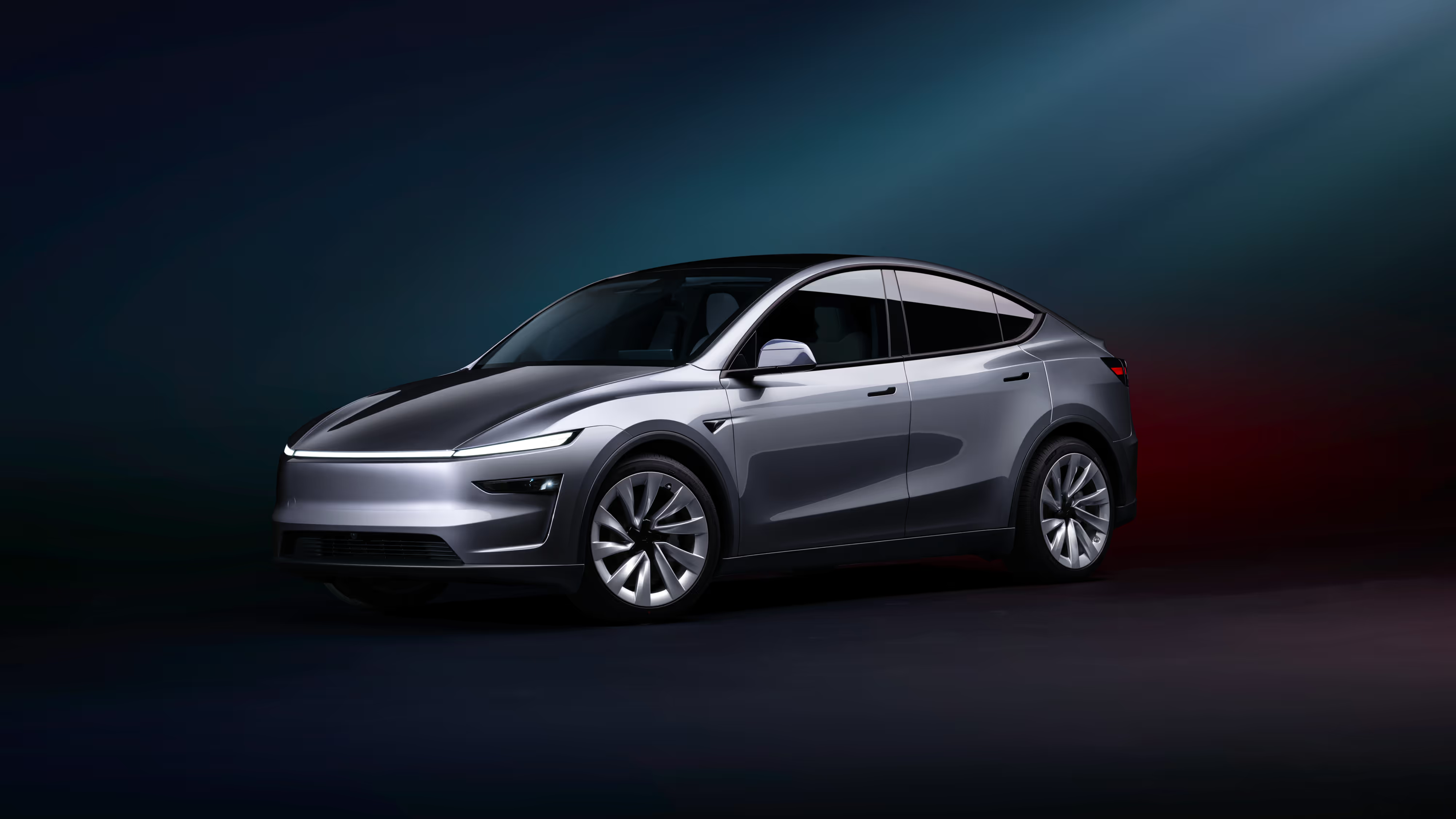
The Model Y is Tesla's best-selling vehicle and shares its platform, interior, and most of its tech with the Model 3, so much of the Model 3 buying advice applies here too. The key timeline to know is the early-2025 "Juniper" refresh, which brought new front and rear styling (including a full-width light bar), a quieter cabin with acoustic glass, ventilated front seats, a rear-seat screen, and a retuned suspension. Notably, Tesla kept the turn-signal stalk on the refreshed Y rather than moving to wheel buttons as it did on the Highland Model 3. Pre-Juniper cars (2020-2024) are plentiful and well-understood.
Check the heat pump and HVAC system, especially on 2020-2022 cars. There was a 2021-2022 over-the-air recall campaign where a heat-pump valve could stick and cut off cabin heat in cold weather; it's fixable via software, but confirm the update was applied and that the climate system heats and cools properly on your test drive. As with all Teslas, inspect panel gaps, paint, and the rear hatch alignment, since early build quality was uneven, and verify the touchscreen, cameras, and power liftgate all work.
If you need the optional third row, confirm the specific car actually has it, because it was a limited option and the seats are small and best for kids. Standard Range Model Y variants generally use LFP battery chemistry (chargeable to 100% daily), while Long Range and Performance use NCA (charge to 80-90% daily). Also verify the December 2023 Autopilot driver-monitoring update and the late-2024 rearview-camera fix were applied where applicable. Like the rest of the lineup, the Model Y has depreciated significantly, making used examples a strong value.
2020 — Launch year. The Model Y debuted in early 2020 as a compact crossover on the Model 3 platform, initially in Long Range and Performance trims with a heat pump from the start (the first Tesla to get one).
2021 — The optional third-row seat (seven-seat configuration) was introduced. Running improvements aligned the Y with the Model 3's updates; strong production ramp.
2022 — Standard Range / base variants expanded, with LFP battery chemistry used in entry trims. A 2021-2022 heat-pump software recall was addressed via OTA update. High production volume.
2023 — Largely carryover with running changes and continued strong volume. The third-row option remained available on Long Range cars.
2024 — Carryover year before the refresh, with minor running updates. Pre-Juniper 2024 cars are common and mechanically well-understood.
2025 — The "Juniper" refresh arrived: new front and rear styling with a full-width light bar, acoustic glass, ventilated front seats, ambient lighting, power-reclining second row, a rear-seat screen, and a retuned, quieter ride. The turn-signal stalk was retained. A Performance variant of the refreshed Y followed later.
2026 — Continuation of the Juniper generation with running updates.
The Model Y is Tesla's mainstream family vehicle: a compact crossover SUV that's become the brand's volume seller and, for most shoppers, the practical sweet spot. It's built on the Model 3's platform and shares its screens and software, but adds a taller body, a hatchback opening with more cargo room, a higher seating position, and an optional small third row.
Against the Model 3, the Y is the more versatile choice. It costs more and is slightly less efficient and less sporty to drive, but it's far easier to load with strollers, dogs, and gear, and the upright shape suits families better. If you're choosing between them, it really comes down to sedan-versus-SUV priorities and budget.
Moving up the lineup, the Model X is the larger, more expensive three-row SUV with falcon-wing doors and flagship performance, aimed at buyers who need more space and luxury than the Y offers. The Model S is the flagship sedan, and the Cybertruck serves the pickup niche. The Model Y slots in as the do-everything option: roomier than the 3, far more affordable than the X, and the easiest recommendation for a family that wants one Tesla to cover most needs.
Survey feedback from Recurrent's community of EV owners that includes a variety of model years and vehicle trims.

The optional third row seats two and is small, best suited to children on shorter trips. It was a limited option on Long Range cars, so don't assume a listing has it. Fold the second row and physically confirm the third-row seats are present before buying if that's a priority.
The 2025 Juniper refresh has a full-width LED light bar across the front, sleeker styling front and rear, ventilated front seats, and a rear-seat screen. It keeps the turn-signal stalk. Older 2020-2024 cars have a more conventional Model-3-style front end and no light bar.
It's mechanically simple and generally dependable, but early cars had uneven fit-and-finish (panel gaps, paint, rear-hatch alignment) and some HVAC/heat-pump issues addressed by a software recall. Confirm the climate system heats and cools, the power liftgate works, and the cameras and touchscreen function normally.
Standard Autopilot stays with the car. Paid upgrades like Enhanced Autopilot or Full Self-Driving are usually tied to the vehicle but can be inconsistent on resales, so check the car's software menu directly to confirm what's actually enabled rather than relying on the listing.