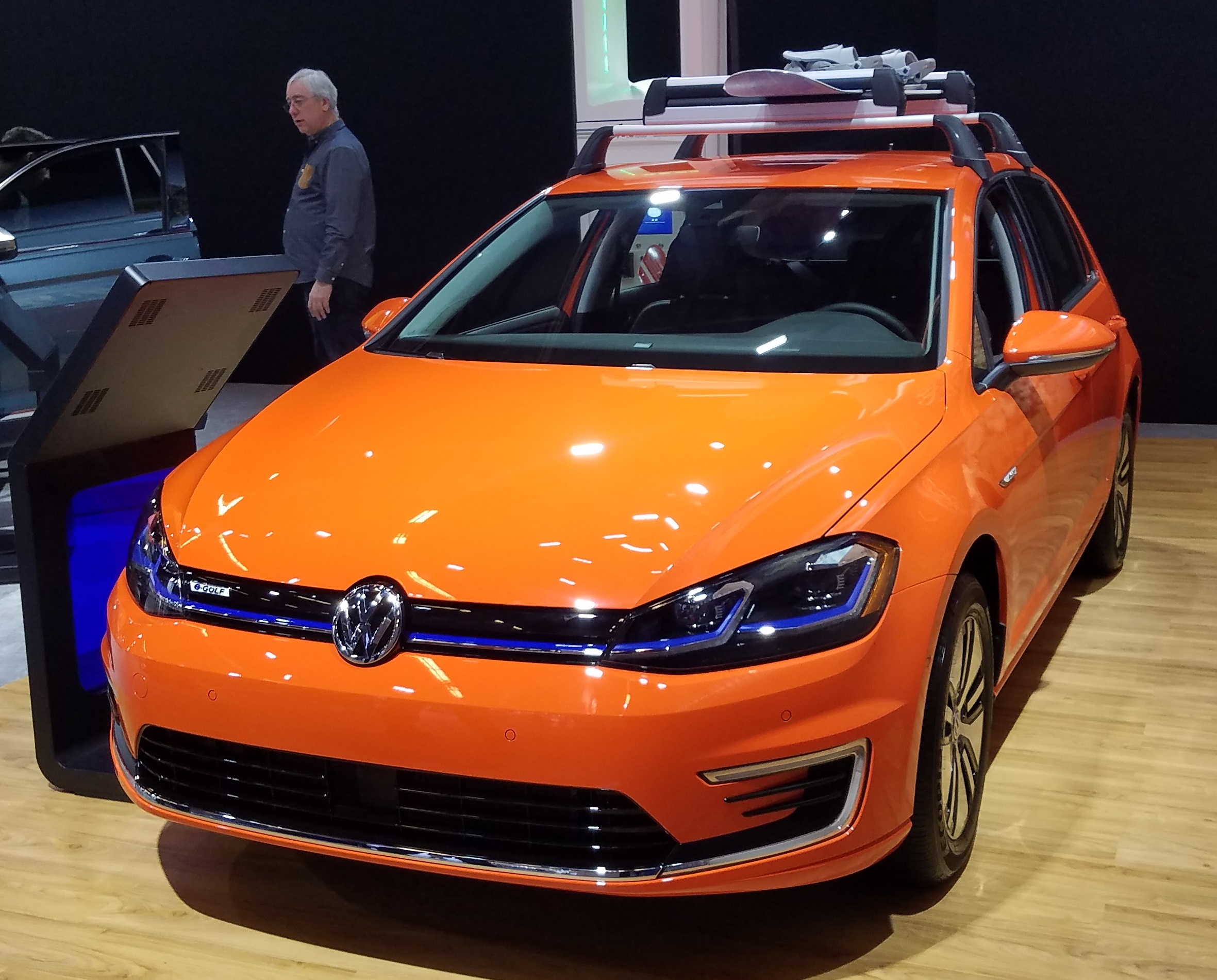
Volkswagen e-Golf

  • Range after 3 years
  • Range after 5 years
  • 95% of original
  • 94% of original
Expected range based on over 1 billion miles of real world driving data from the
from the Recurrent community of EV owners.
4.6
out of 5
Community Satisfaction
Volkswagen's first battery electric vehicle of the modern age is the e-Golf, a sporty compact hatchback with a rated range between 83 and 125 miles. It was released in the US in 2015 as part of a larger redesign of the iconic Golf line, which has been in production since 1974. Drivers love the Golf's legacy style, fun drive, and low maintenance ownership. Due to the limited number of e-Golf drivers in our research fleet, some of our findings are preliminary.

Battery

Battery Warranty

8 yr / 100k miles

Time to add 100 miles

53 - 55 min

Peak Charging

50kW

Efficiency

3.43 - 3.52 mi/kWh

MPGe

116 - 119 miles

Range

Range vs EPA

Higher

Winter Range (32°F)

76%

Summer Range  (90°F)

95%

Trims

Limited Edition

24.2 – 35.8 kWh

SE

24.2 – 35.8 kWh

SEL Premium

24.2 – 35.8 kWh

Tips for Buying Used

The defining inspection point on a used e-Golf is whether the specific car is equipped with DC fast charging. On the e-Golf, the CCS/Combo fast-charge port was optional on some trims rather than universal, so two otherwise-identical cars can differ on this. If you ever plan to road-trip or top up quickly away from home, confirm the car physically has the Combo port and that fast charging functions, rather than assuming it. This is an equipment check, not a performance question, and it is the easiest thing to overlook.

Battery size is the other key variable. Early cars (roughly 2015-2016) used a smaller pack, and from the 2017 model year VW fitted a larger pack, which improved usable range. The e-Golf's battery is liquid-cooled rather than air-cooled, and the model has no widely-documented thermal-defect pattern, which helps explain its generally solid reliability reputation. Trims included SE, SEL Premium, and a Limited Edition; equipment such as the onboard charger and fast-charge capability varied by trim and year, so match the trim to the features you actually want.

On the whole the e-Golf behaves like the dependable gas Golf it is based on, which is part of its appeal as a low-drama used EV. Pricing has depreciated significantly since VW discontinued it in favor of the ID-series electric cars, so it can represent good value, especially in a later larger-battery car that has fast charging equipped. Verify the battery size, confirm the charge-port equipment, and otherwise inspect it like any used compact VW.

Model Years

2015 — One of the e-Golf's first US years, using the smaller battery. A compact, liquid-cooled EV based on the standard Golf; check whether the individual car was optioned with DC fast charging.

2016 — Carryover with the smaller pack. Same advice applies on confirming fast-charge equipment and trim-specific features.

2017 — Significant update: VW increased the battery capacity, improving usable range over the earlier cars. Generally the more desirable configuration on the used market.

2018-2019 — Continued with the larger pack and the SE / SEL Premium trim structure before the e-Golf was discontinued as VW transitioned to its ID-series EVs.

How it Compares

The clearest comparison is to the gas Golf the e-Golf is based on. Visually and dimensionally it is a Golf hatchback, with the same practical five-door body, comparable seating, and a familiar VW interior, just with an electric powertrain in place of the engine. That shared platform is a plus for used buyers: it drives like a normal compact Golf and benefits from that car's broadly good reliability reputation.

Against VW's newer EVs, the e-Golf sits below the ID.4, the electric crossover that effectively replaced it in the US lineup. The ID.4 is larger, a crossover rather than a hatchback, and positioned at a higher tier with more modern EV hardware. Globally, the ID.3 hatchback is the closer spiritual successor in size and body style, though it was not sold in the US.

In short, the e-Golf is the compact, hatchback, lower-tier entry point: smaller and simpler than the ID.4, closely related to a conventional Golf, and aimed at buyers who want a straightforward city-and-commuter EV rather than a crossover.

Owner Satisfaction

Survey feedback from Recurrent's community of EV owners that includes a variety of model years and vehicle trims.

"The car is amazing in general. It is a Golf after all: regardless of the generation, it has always been a fun and reliable car. I love it."
"I was spending about $600 a month in fuel commuting 60 miles a day to and from work, now I charge for free at work, and maybe spend $20 a week at home/fast charging."

Looking to Sell?

No games. No spam. No headaches. Just great offers for great electric cars.
Learn More

FAQ

How do I know if a used e-Golf has DC fast charging?

Don't assume it does. The CCS/Combo fast-charge port was optional on some e-Golf trims, so confirm the specific car physically has the Combo port and that fast charging works before buying. It is purely an equipment check that varies car to car.

What's the difference between the early and later batteries?

Cars from roughly 2015-2016 use a smaller pack, while 2017-and-later cars use a larger pack with more usable range. The later, larger-battery cars are generally the more sought-after used choice.

Is the e-Golf reliable?

It has a generally solid reputation, helped by being based on the proven gas Golf and using a liquid-cooled battery with no widely-documented thermal-defect pattern. Inspect it as you would any used compact VW.

Is the e-Golf reliable?

US e-Golfs came in SE, SEL Premium, and a Limited Edition, with equipment like the onboard charger and fast-charge capability varying by trim and year. Match the trim to the specific features you want rather than assuming they are all equipped the same.