


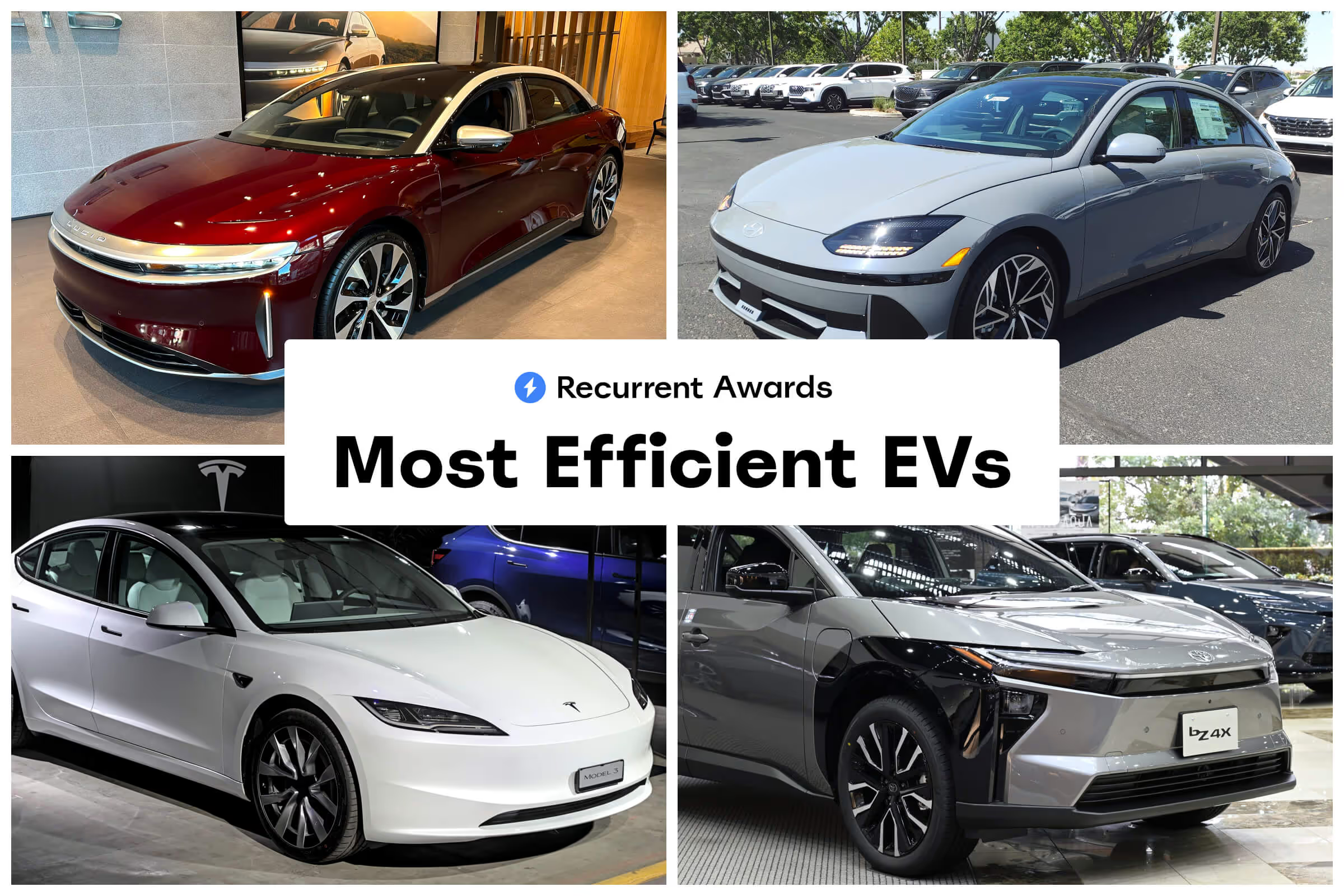


Despite technological advancements, EV efficiency has actually declined since its peak in 2018, due to the market preferences for larger, heavier, and less aerodynamic vehicles , such as SUVs, trucks, and boxy crossovers. that appeal to mainstream drivers (think: SUVs, trucks, large crossovers). But, for energy-conscious consumers, maximizing efficiency represents the true pinnacle of electric vehicle capability, since electric motors are three to four times more efficient than combustion engines.
This ranking highlights the EVs that use energy most effectively in real-world driving. Instead of focusing on battery size or total range, we look at energy consumption (kWh per 100 miles) and MPGe, the EPA’s miles-per-gallon equivalent metric.
The result: vehicles that deliver more miles per charge and lower energy costs.
Reminder: EVs are most efficient in city driving, unlike gas cars. This happens for two main reasons:
- Regenerative braking turns stopping into charging. When you brake in an EV, the car captures energy instead of wasting it as heat. In stop-and-go traffic, this means you're constantly recharging a bit every time you slow down.
- Slower city speeds mean less wind resistance. EVs don't have to fight against as much air at lower speeds, which saves battery power.
Together, these factors help EVs get about 15-25% better mileage in the city than on highways, which is the opposite of what happens with gas cars.
Methodology: Recurrent's Most Efficient EVs of 2026 were determined based on combined efficiency in kWh/100miles as reported to the EPA. Scroll down to see more

1. Lucid Air
Efficiency: 23 kWh/100 miles
MPGe: 146.5
Body style: Luxury sedan
The Lucid Air continues to set the efficiency benchmark. Its advanced powertrain, lightweight engineering, and aerodynamic design allow it to travel farther on each kilowatt-hour than any other production EV. While its high price and limited charging network may be considerations for potential buyers, it also took the crown for Recurrent’s “Most Efficient EV of 2025” and “Fastest Charging EV Sedan of 2025.” This year, it was third in line for "Fastest Charging."

2. Hyundai Ioniq 6
Efficiency: 25 kWh/100 miles
MPGe: 134.8
Body style: Aerodynamic midsize sedan
The Ioniq 6’s streamlined design and highly optimized drivetrain make it one of the most energy-efficient vehicles on the road. Its low drag coefficient helps convert electricity into miles with minimal loss. It was the second pick for "Fastest Charging EV" in 2026, taking just 7.43 minutes to add 100 miles of charge at a high-voltage DC fast charger.
.avif)
3. Tesla Model 3
Efficiency: 25 kWh/100 miles
MPGe: 134.8
Body style: Compact sedan
The Model 3’s efficiency comes from Tesla’s focus on aerodynamic design, drivetrain optimization, and software control. Its balance of performance and low energy consumption keeps it among the most efficient EVs available.
.avif)
4. Toyota bZ
Efficiency: 25.5 kWh/100 miles
MPGe: 132.2
Body style: Compact SUV
Toyota’s electric crossover enters 2026 with a new name and upgrades aimed at efficiency, performance, and usability. The refreshed model features improved aerodynamics, enhanced battery management, and a more refined design. Updates to thermal management and battery conditioning help the vehicle maintain efficiency in varied temperatures while improving fast-charging performance.
.avif)
5. Tesla Model Y
Efficiency: 26 kWh/100 miles
MPGe: 129.6
Body style: Compact crossover SUV
Despite its larger profile, the Model Y remains highly efficient. Tesla’s aerodynamic shaping and energy-management software allow it to maintain strong efficiency in a practical family vehicle.
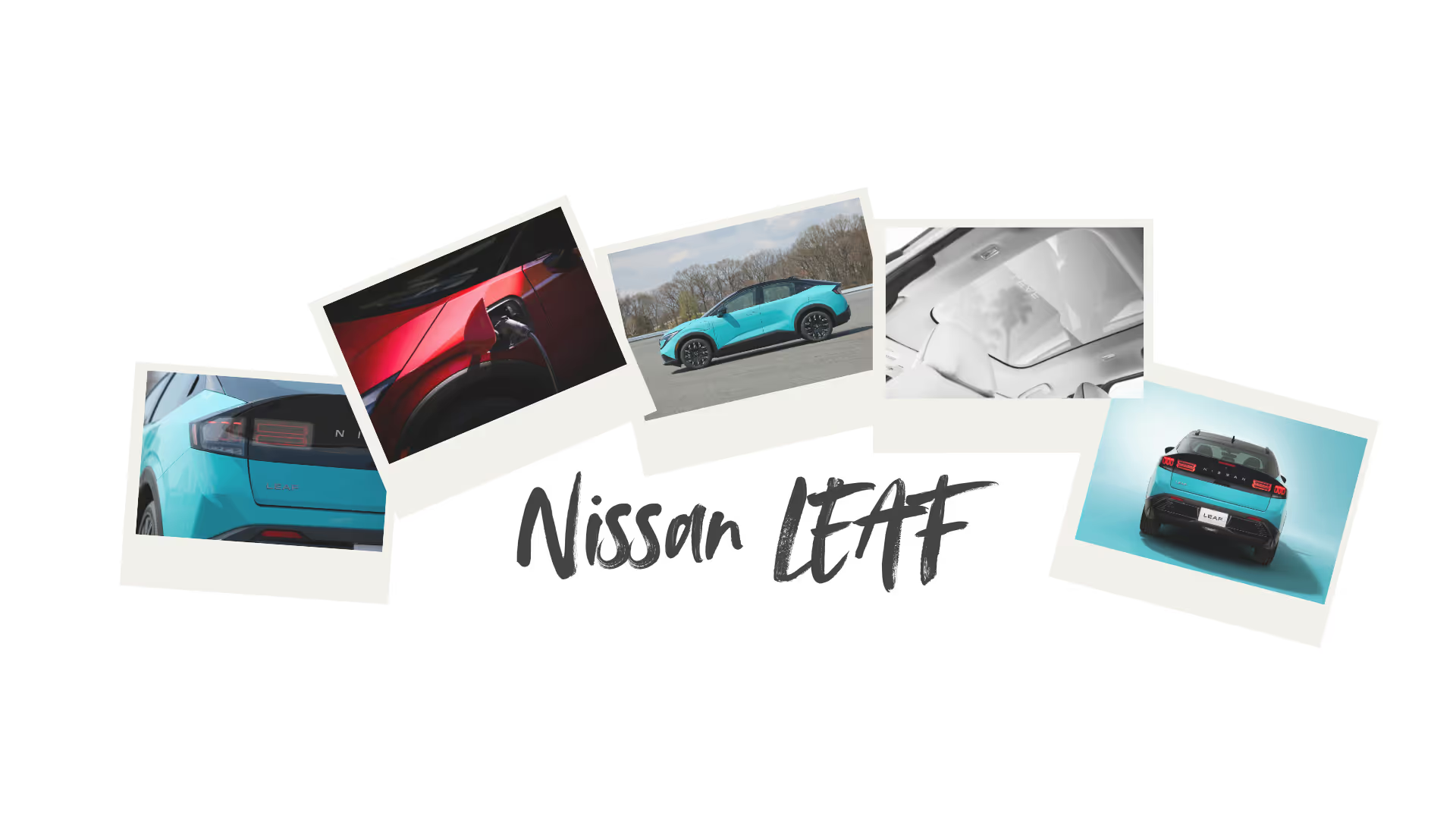
6. Nissan LEAF
Efficiency: 28 kWh/100 miles
MPGe: 120.4
Body style: Compact crossover (redesigned)
The 2026 LEAF marks the model’s most significant transformation since its debut back in 2011. Fully redesigned as a compact crossover, the new LEAF improves aerodynamics, thermal management, and battery performance while maintaining strong efficiency. A larger battery option, improved cold-weather battery management, and enhanced fast-charging capability help the LEAF deliver better real-world efficiency and usability.

7. Subaru Solterra
Efficiency: 28 kWh/100 miles
MPGe: 120.4
Body style: Compact SUV with standard AWD
The 2026 Solterra, cousin of the Toyota BZ, also received substantial 2026 updates to improve efficiency and range while preserving Subaru’s all-wheel-drive capability. A larger 74.7-kWh battery, improved thermal management, and drivetrain enhancements boost range and energy efficiency compared to earlier models.
Runner Ups:
- Hyundai Kona EV
- Hyundai Ioniq 5
- BMW i4


